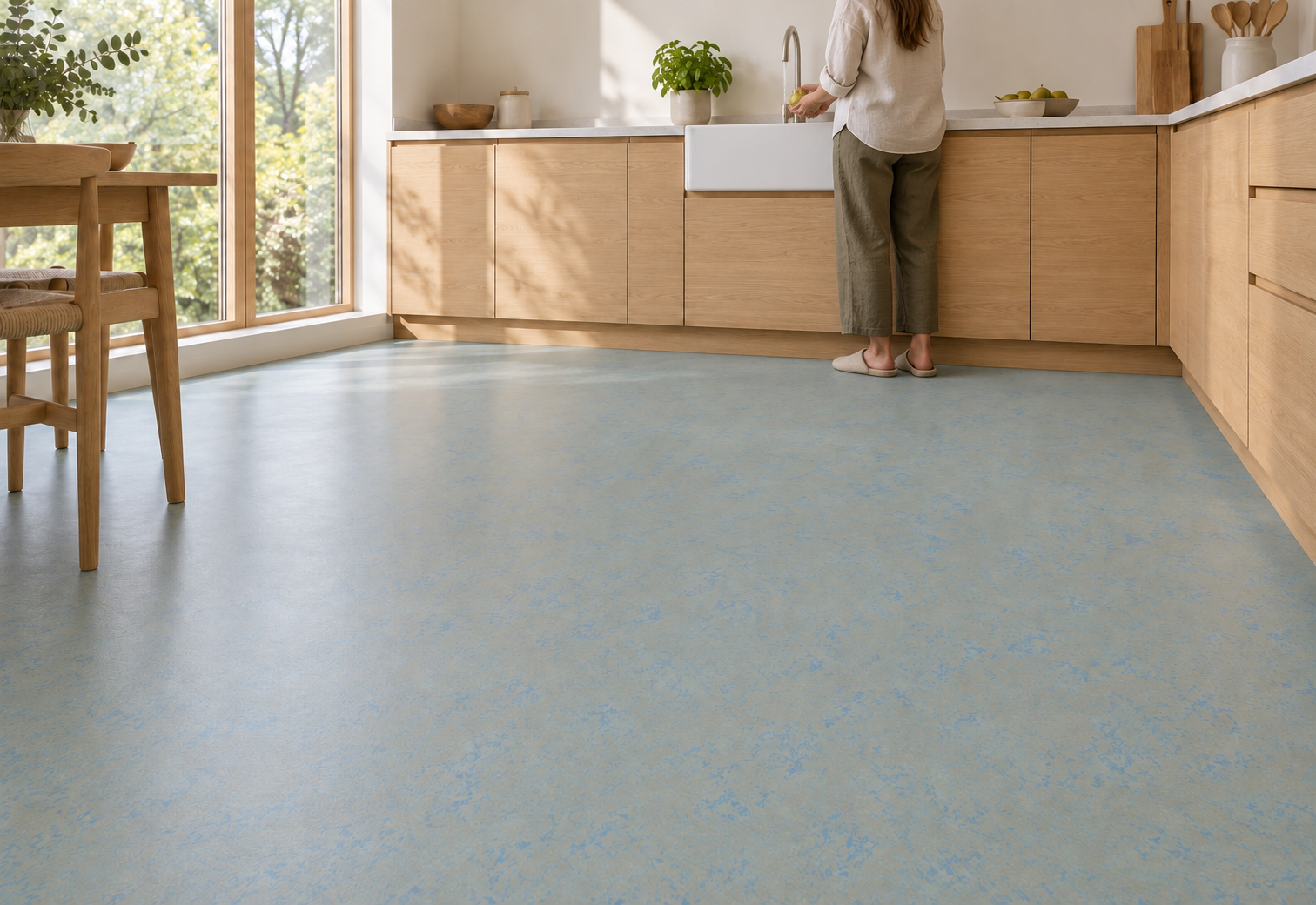
The key to preventing linoleum floors from yellowing and wearing out is to stop treating them like indestructible vinyl. Instead, embrace a care routine that protects the natural, porous linseed oil composition that makes linoleum vulnerable to harsh chemicals, excessive water, and sun exposure. The solution lies in using pH-neutral cleaners, minimal water during mopping, and periodically applying protective acrylic finishes.
The Critical Misunderstanding: Linoleum Is Not Vinyl
The most common and costly mistake homeowners make is confusing linoleum with vinyl. They look similar, feel similar underfoot, and occupy the same spaces like kitchens and bathrooms. But this simple case of mistaken identity is the root cause of premature yellowing, peeling, and dullness. Their care requirements are worlds apart because their very essence differs.
Material Composition Differences
Linoleum: This is a “living” floor. Linoleum is made from natural materials such as linseed oil, cork, wood dust, and limestone, making it eco-friendly. It uses renewable materials including linseed oil, tree resins, recycled wood flour, cork dust, and mineral pigments, all mounted on jute or canvas backing. This natural composition makes it porous and susceptible to damage from wrong cleaning methods. The linseed oil providing flexibility and antimicrobial properties is also the element you must protect, not strip away.
Vinyl: Vinyl, or PVC, is a synthetic, petroleum-based product—essentially a multi-layered plastic sheet. The top layer is a clear urethane “wear layer” acting as a tough, non-porous shield. This is why vinyl withstands harsh cleaners, steam mops, and standing water far better than linoleum. When you treat linoleum like vinyl, you attack its very structure.
Durability vs. Required Care
Both flooring options are durable, but longevity ties directly to care received. Vinyl is low-maintenance but has shorter lifespans, typically 10-20 years. Once its wear layer is deeply scratched or damaged, repair is difficult, and entire floors often need replacement.
Linoleum requires more mindful care, demanding the right cleaners and protection from excessive moisture. However, its color and pattern are consistent throughout its entire thickness, not just printed on top. This means minor scratches can often be buffed out. With proper maintenance routines, its potential lifespan is extraordinary—properly cleaned and cared for, linoleum can last 30 to 40 years in high-traffic areas.
Understanding Yellowing and Wear
That frustrating yellow or brownish tint appearing on older linoleum, especially under rugs or appliances, isn’t necessarily dirt staining. It’s a natural chemical process known as “ambering.”
The Ambering Process
Ambering is the slow oxidation of linseed oil within linoleum. Think of how cut apples turn brown when exposed to air—a similar process happens with floors over many years. While this is natural, certain factors can accelerate it dramatically. A protective coating is often added by manufacturers to prevent surface darkening or yellowing. When this factory finish wears down, floors become much more vulnerable.
The two primary culprits speeding up this process are direct sunlight and harsh, alkaline chemicals. UV rays from sunlight act as powerful catalysts for oxidation, which is why protecting linoleum from sun damage with curtains or UV-blocking film is key to long-term care. The second culprit is what you use to clean it.
Cleaning Do’s and Don’ts
The Absolute No-List
Using wrong products can cause irreversible damage, stripping finishes, accelerating yellowing, and making floors brittle.
Ammonia-based cleaners: Public enemy number one for linoleum. Ammonia is highly alkaline (high pH) and aggressively attacks linseed oil, causing rapid yellowing and breakdown. Linoleum is susceptible to damage from excessive moisture and alkalinity, so ammonia-based cleaners should never be used.
Bleach: Not safe for linoleum. Bleach is a harsh oxidant that permanently discolors floors, leaving splotchy, lightened patches that cannot be fixed. It’s also terrible for natural materials.
Vinegar: Over time, yes. While often touted as a natural cleaning hero, vinegar is acidic. Its low pH can eat away at floor finishes, leaving them dull and susceptible to stains and water damage.
Steam mops: The combination of high heat and concentrated moisture weakens adhesives holding floors down, causes seams to peel, and forces water deep into porous material cores.
Abrasive cleaners: Avoid powders like Comet or harsh scrubbing pads. These create micro-scratches on surfaces that trap dirt and permanently dull sheens. For textured linoleum, always use soft bristle brushes.
The Right Weekly Cleaning Routine
Daily maintenance: Sweep with soft-bristled brooms or use vacuums. The best vacuum for linoleum floors is a canister vac or upright with beater bars turned off to avoid scratching.
Weekly mopping procedure:
- Choose pH-neutral cleaners: The best thing to clean linoleum floors with is a pH-neutral cleaner. Many brands offer solutions specifically formulated for linoleum or Marmoleum. Check labels for “pH-neutral” or “safe for linoleum.”
- Use a two-bucket method: Fill one bucket with cleaning solution diluted in cool or lukewarm water. Fill a second bucket with clean, cool rinse water. This prevents mopping with dirty water.
- Mop with minimal water: The best mop for cleaning linoleum is a microfiber flat-head mop wrung out until just damp, not soaking wet. Linoleum can be susceptible to damage from standing water, so it’s critical to use as little liquid as possible and dry floors thoroughly afterward. Work in small sections, mopping with solution and rinsing your mop pad in clean water before proceeding.
- Dry floors completely: This step is not optional. The best way to dry linoleum floors after mopping is with clean, dry microfiber cloths or towels. Never let water air-dry, as it can seep into seams and leave mineral spots.
Tackling Tough Problems
For grease in kitchens, pH-neutral cleaners with microfiber cloths should work. For tougher stains, make a paste of baking soda and small amounts of water. Apply to stains, let sit briefly, and gently scrub with soft cloths. Always test cleaning solutions in inconspicuous areas first. For scuff marks, dry tennis balls or melamine foam erasers often work wonders.
If floors have yellowed from ambering, especially under rugs, the solution is often not about cleaning but gentle light exposure. Remove rugs for several weeks. Ambient room light will often even out color as the rest of the floor “catches up.” For severe, overall yellowing, the only true fix is to professionally strip old, damaged finishes and apply new ones.
Proactive Protection: The Secret to 40-Year Lifespans
Reactive cleaning is only half the battle. The most important part of long-term care is proactive protection through applying modern acrylic floor finishes, often mistakenly called “wax.”
Understanding Floor Finishes
The best protector for linoleum floors is high-quality, manufacturer-recommended acrylic floor finish. Think of this finish as a sacrificial, clear shield. It takes scuffs, spills, and wear from foot traffic so linoleum itself doesn’t have to. Over time, this shield wears down and needs reapplication.
For high-traffic areas, this might be an annual task. For less-used rooms, every few years may suffice. The goal is to reapply finish before old layers have worn through completely.
Application Process
- Strip old finish: Use commercial floor strippers designed for linoleum, following manufacturer instructions carefully. This is often the hardest part but is essential for clean slates.
- Clean and neutralize: Thoroughly clean and rinse floors with pH-neutral cleaners to remove all stripper residue. Let the floors dry completely for 24 hours.
- Apply finish: Using clean microfiber applicator pads, apply thin, even coats. Start at corners farthest from doors and work your way out. Let it dry completely according to product directions.
- Build thin coats: Apply 2-3 more thin coats, allowing each to dry fully in between. Thin coats are more durable and look better than one thick, gloppy coat.
Tailored Care Approaches
Eco-Conscious Renovators
You chose linoleum for sustainability, and your care routine should reflect that. Stick to verified eco-friendly, pH-neutral linoleum cleaning solutions. A great natural floor cleaner can be made with a few drops of plant-based dish soap in a gallon of cool water. Avoid the temptation to use vinegar. Regular sweeping and damp-mopping with minimal, eco-friendly cleaner is your best strategy. When applying finishes, look for low-VOC acrylic sealers.
Misinformed New Homeowners
You may have just discovered that your “easy-care” floor you thought was vinyl is actually linoleum. Stop your current cleaning routine immediately. Discard any all-purpose cleaners, ammonia-based products, or steam mops. Your floor may already have a dull or slightly sticky feel from improper cleaning. Get dedicated pH-neutral cleaners for linoleum and microfiber mops. If damage is significant, consider hiring professionals for one-time restoration services to strip old residue and apply fresh protective finishes.
Long-Term Investors
You see your linoleum floors as 40-year assets, not just surfaces. Create floor care schedules including daily sweeping, weekly damp-mopping with high-quality pH-neutral cleaners, and inspecting acrylic finishes every six months in high-traffic areas. Understanding that finishes are sacrificial layers, learn how to properly apply them or budget for professional application every 1-3 years. Be vigilant about using furniture pads to prevent scratches and doormats to trap abrasive dirt.
The longevity and beauty of your linoleum floor depend entirely on understanding its unique, natural composition and treating it with the gentle care it deserves. By avoiding harsh methods meant for synthetic flooring and embracing proactive, protective maintenance routines, you can ensure your floor remains vibrant and durable for decades to come.